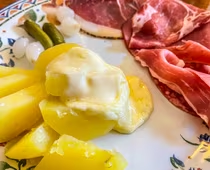
Raclette
The heavenly simplicity of delicious melted cheese

Experience the delightful indulgence of Raclette, a traditional Swiss cheese dish that is as delicious as it is unique.

Home Recipes
Cheese
Potatoes
French
Video
Ingredients
Steps to make it
Nutrition Facts
Share this recipe
Comments
Main Course
Recipe Cuisine:
Alpine
Servings:
6 people
5 to 6 slices of Raclette cheese per person
Preparation Time:
5 minutes
Cooking Time:
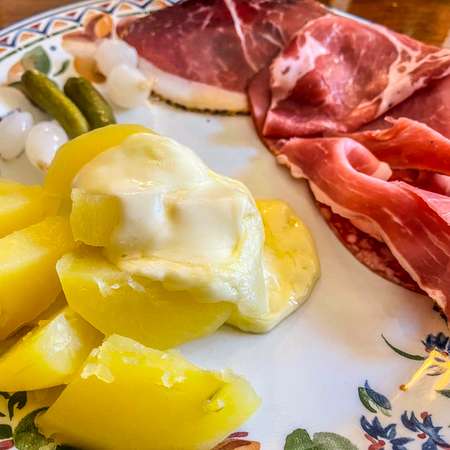
Raclette involves melting a wheel of Raclette cheese and scraping the molten goodness onto various accompaniments like boiled potatoes, pickles, cured meats, and vegetables. This interactive and social dining experience is perfect for gatherings, creating unforgettable moments around warm and melty cheese. Embrace the rich flavors and creamy texture of Raclette for a truly memorable culinary adventure.
Raclette is a Swiss dish, also popular in France, based on heating cheese and scraping off the melted part. Raclette cheese is a type of Swiss cheese marketed specifically to be used for this dish.
The name of the dish, Raclette, comes from the French verb "racler" which means “to scrape”. It refers to both the type of cheese and the dish it is served with.
History
Dishes of melted cheese were mentioned in medieval texts from Swiss convents as early as 1291. The melted cheese was originally consumed by peasants in the mountainous Alpine regions of the cantons of Valais and Fribourg (Switzerland), and Savoie and Haute-Savoie (France). It was then known in the German-speaking part of Switzerland as Bratchäs, or "roasted cheese". Cow herders carried cheese with them when they were moving cows to or from pastures up in the mountains. In the evening, the cheese would be placed next to a campfire for softening, then scraped onto bread.
The Dish
Traditionally, a raclette is made in front of an open fire, with the cut part of a large piece of cheese (usually a half wheel) facing the heat. The melted layer is then regularly scraped into a plate. Nowadays a heat lamp is used as a substitute for the open fire, allowing customers to melt the cheese themselves right on their table. Modern machines also use individual trays, allowing guests to melt slices of cheese at their own pace, avoiding having to take turns waiting for the top layer of the wheel to be melted.
The melted cheese is usually poured over boiled and sliced firm potatoes (Bintje, Charlotte, or Raclette varieties). it is accompanied by cornichons (gherkins), pickled onions, and dried meat, such as jambon cru/cuit, salami, and viande des Grisons.
A popular French option is to serve it with white wine, such as Savoy wine, but Riesling and pinot gris can also be used.
Step by Step Recipe Instruction Video:
Ingredients:
- Raclette Cheese
- Potatoes
- Pickles
- pickled onion
- dried or cured meats such as smoked ham, salami, prosciutto, etc
Steps to make it:

© Copyrigh 2026 Laki Maikaʻi. All rights reserved.
Making raclette at home
While many types of cheese can be melted, the use of Raclette cheese and its distinctive flavor is a necessity. The cheese has become more widely available in stores such as Trader Joe’s.
If you have access to the cheese but don’t have a specialty machine…whatever you do, do not use a microwave!
A delicious way to enjoy this cheese is to lay some boiled and sliced potatoes in a buttered dish (make sure to use firm potatoes so that they don’t turn into mush), add some pepper, place some slices of raclette cheese on top, and broil it in the oven until the cheese is nicely melted and starts to have a golden brown color.
Serve with the traditional sides, prosciutto is also a nice accompaniment, and drink Savoy white wine or any other dry white wine.

© Copyrigh 2026 Laki Maikaʻi. All rights reserved.

© Copyrigh 2026 Laki Maikaʻi. All rights reserved.

© Copyrigh 2026 Laki Maikaʻi. All rights reserved.
Did you make this recipe?
Please Tag us on Instagram:@laki_maikai
Nutritional information provided is an estimate only. Please consult the labels of ingredients you use for more accurate results. Daily Value on the Nutrition and Supplement Facts Labels.