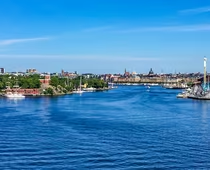
Stockholm
Stockholm is the cultural, media, political, and economic center of Sweden.
Location
Stockholm, Sweden

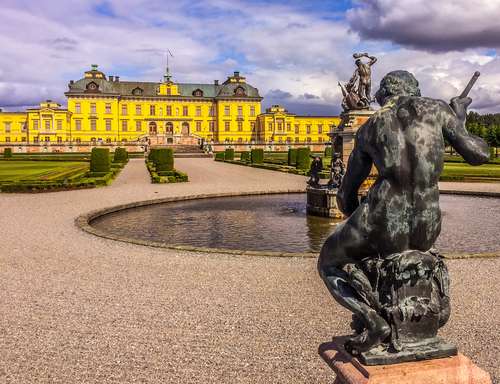
Through an exchange of apartments, we recently had an opportunity to spend a week in Stockholm, the capital of Sweden. The city is on an archipelago comprised of 14 islands in the Baltic Sea.
History
The earliest written mention of the name Stockholm dates from 1252, by which time the mines in Bergslagen made it an important site in the iron trade. The first part of the name (stock) means log in Swedish, although it may also be connected to an old German word (Stock) meaning fortification. The second part of the name (holm) means islet and is thought to refer to the islet Helgeandsholmen in central Stockholm. According to the Eric Chronicles the city is said to have been founded by Birger Jarl to protect Sweden from sea invasions made by Karelians after the pillage of Sigtuna on Lake Mälaren in the summer of 1187.[30]
Stockholm's core, the present Old Town (Gamla Stan) was built on the central island next to Helgeandsholmen from the mid-13th century onward. The city originally rose to prominence as a result of the Baltic trade of the Hanseatic League.
Throughout Sweden's history, walls were created in Stockholm to defend the city from attacks. These defensive walls were modified throughout the 13th to the 16th century. In 1625, the Great Stockholm Fire of 1625 destroyed the southwestern section of Stadsholmen, an island in the center of Stockholm.[31] The amount of destruction led to the beginning of the demolition of the Stockholm walls. Today, most of the younger city walls cannot be found anywhere above ground. However, parts of the northern city walls are preserved in the Museum of Medieval Stockholm.
Stockholm became a modern, technologically advanced, and ethnically diverse city in the latter half of the 20th century. Many historical buildings were torn down during the modernist era, including substantial parts of the historical district of Klara, and replaced with modern architecture. However, in many other parts of Stockholm (such as in Gamla stan, Södermalm, Östermalm, Kungsholmen, and Vasastan), many "old" buildings, blocks, and streets built before the modernism and functionalism movements took off in Sweden (around 1930–35) survived this era of demolition. Throughout the century, many industries shifted away from industrial activities into more high-tech and service industry areas.
What to know about Sweden
The first bit of good news is that despite the fact that the Swedish language looks hard with many long words, weird letters, and strange pronunciation, people are generally really friendly, speak really good English, and are welcoming and willing to help a lost or confused tourist.
Also, despite the fact that Sweden is part of the European Union and the Schengen Agreement, it has not yet adopted the Euro as a currency, the official currency is still the krona SEK. But don't rush to get currency converted as it is not uncommon for places like bars and restaurants to not accept cash.
Another peculiar particularity of Sweden is its latitude, it is far away from the equator. As a result, in June the sun rises at 3 am and sunsets are after 10 pm, providing over 18 hours of daylight. And obviously, winters are the opposite with about 6 hours of daylight. The duration of the sunsets is also different, they last about 94 minutes in Stockholm in June, and "only" 55 minutes in December.
As a result of this, the Swedes live for the relatively short and warm Summer, and, being in a vastly untouched country filled with natural beauty, many Swedes flee the city in summer to spend time in the countryside, in isolated places along the coastline, or on remote islands in the archipelago. If visit during the midsummer festival the city will be mostly empty and many stores will be closed.
Also a result of the dark and cold winters, many Swedes have historically had a rather complicated relationship with alcohol. Systembolaget, a chain of liquor stores run by the government now has a monopoly on all sales of alcohol stronger than 3,5%. Even though you can easily find your favorite brands of beer at any regular grocery store, you might be deceived by the fact that they unnoticeably have lower alcohol content.
What to see and do in Stockholm
Stockholm has an extensive public transport system, with a common ticket system in the entire Stockholm County that allows for easy travel between different modes of transport. The Stockholm Metro (in Swedish the Tunnelbanan), is easy, convenient, and extremely affordable if you plan and buy passes ahead.
The visitstockholm.com website has a lot of information on the city itself. The cobblestone streets and ochre-colored buildings of Gamla Stan (the old town) are home to the 13th-century Storkyrkan Cathedral, the Kungliga Slottet Royal Palace, and the Nobel Prize Museum. A system of over 50 bridges allows people to move between the islands, along with ferries and sightseeing boats.
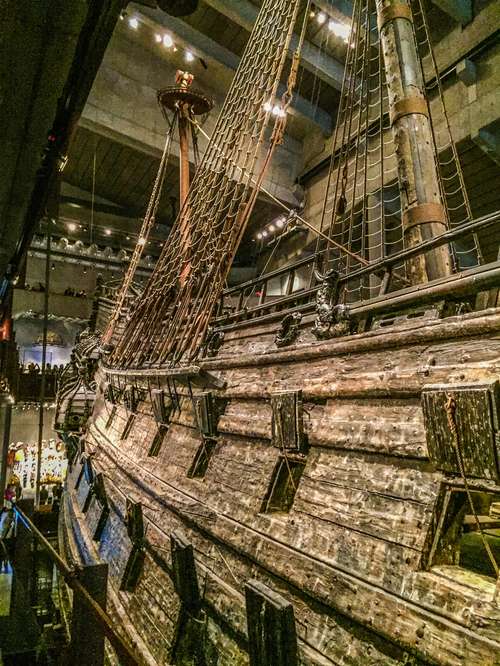
Stockholm is one of the most crowded museum cities in the world with around 100 museums, and you should of course visit some of them. The Vasa Museum (in Swedish the Vasamuseet) on Djurgården is not to be missed, it will transport you back in time to see the extraordinary engineering marvel that is the warship Vasa, which sank on her maiden voyage in 1628. It is the only almost fully intact 17th-century ship that has ever been salvaged, and I assure you that photos don’t do it justice!
While there are many architectural marvels, historical buildings and cultural points of interest to see, I have to say that after 4 days we were pretty "citied-out" and ready for a change of scenery...but more on that later!
What and where to eat in Stockholm
There are obviously several Swedish traditional culinary delicacies to try while visiting.
The Köttbullar or Swedish meatballs with their delicious creamy sauce are always a classic and delicious choice.
Though a long history of fishing, Sweden also has many traditional seafood and fish dishes, some may be more of an acquired taste than others.
The Toast Skagen or Räkmacka is an open-faced sandwich loaded with shrimp, and always a delicious choice.
Sill, the pickled herring is by far a local favorite and the most popular way to prepare and serve herring. Various flavors such as mustard, garlic, onion, herbs, and others are added to the fish before serving, restaurants often have their own recipes that they prepare and serve with pride. It is eaten all year round with potatoes, eggs, sour cream, and crispbread.
Surströmming, the sour fermented herring, is another story. It comes in a tin can that is usually opened and consumed outside (in the summer) to control the smell.
One of our favorite meals was in a great setting at the Järnet Bar & Restaurant, we definitely recommend it.
In addition to traditional food, Stockholm is also a truly multicultural city serving gastronomies from around the world, with award-winning chefs and restaurants serving fresh local ingredients and leading the way in farm-to-table and food sustainability.
We were lucky to be there during the International food market at Kulturhuset Sergels Torg and ate many delicious meals there.
Getting away from Stockholm

As mentioned earlier, after 4 days we were a bit tired of buildings and museums and heard that the locals often enjoy taking short cruises out of the cruise ship terminal in Stadsgården, Tegelvikshamn. We easily booked a relatively inexpensive 40-hour cruise to Helsinki with a full day in the Finnish capital through the Viking line website. We cannot recommend this enough, we spent the first few hours of the cruise on the deck of the ship looking in awe at the exceptional scenery unfolding as the ship navigated the narrow channel to get to the open ocean. The evening was spent enjoying a great meal and a family-friendly atmosphere with great entertainment. By morning, after a breakfast buffet with several kinds of smoked salmon and other delicacies, we were in Helsinki and had time to wander the city for an entire day. Back on the ship that evening, we enjoyed an upgraded gastronomic menu (one of the options available when booking the cruise), one of the best culinary experiences we ever had, we cannot recommend it enough if it is still available.

© Copyrigh 2026 Laki Maikaʻi. All rights reserved.