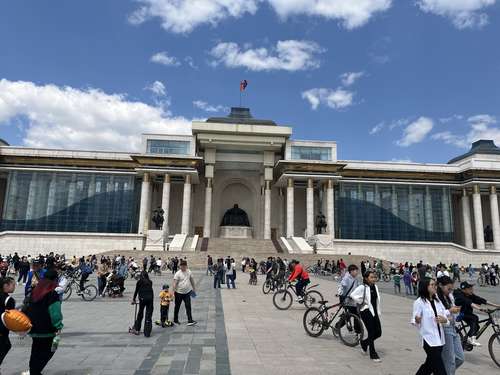
Culture
Mongolia — Where Ancient Traditions Ride with the Wind.
The culture of Mongolia is a living reflection of the steppe—shaped by wind, distance, resilience, and movement. Rooted in a nomadic way of life that stretches back millennia, Mongolian identity has been profoundly influenced by pastoral traditions, reverence for nature, and the rhythms of migration. Over time, additional influences from Tibet through Tibetan Buddhism, from neighboring China, and—since the 20th century—from Russia and Europe have layered new dimensions onto this ancient foundation. The result is one of Asia’s most distinctive cultural tapestries: deeply traditional, yet historically adaptive, with a unique Language.
The Spirit of the Steppe
For centuries, horses have stood at the heart of Mongolian civilization. They are not merely animals of transport but companions, symbols of freedom, and sources of artistic inspiration. From childhood, many Mongolians learn to ride, and horsemanship remains a defining national skill. The horse appears in folklore, music, festivals, and even in the iconic morin khuur (horse-head fiddle), embodying both mobility and identity.
Heroic tradition runs equally deep. Epic tales recount legendary warriors and ancestral protectors who shaped the destiny of the steppe. The Mongolian word for hero—baatar—is woven into personal names and into the name of the capital itself, Ulaanbaatar, meaning “Red Hero.” This reverence for bravery reflects a culture forged through unity, survival, and the sweeping conquests of figures such as Genghis Khan.
Hospitality, meanwhile, is not simply courtesy—it is a moral obligation. On the vast and sparsely populated steppe, offering shelter and food to strangers was once a matter of mutual survival. Even today, a guest entering a ger is welcomed with tea, dairy products, and warmth, often without question.
The Ger: Home and Identity
The ger (yurt) remains one of Mongolia’s most powerful cultural symbols. Mentioned in The Secret History of the Mongols as the dwelling of felt-tent peoples united under Genghis Khan, the ger represents continuity with the past. Remarkably practical, portable, and climate-resistant, it is still home to a significant portion of the population—even in urban districts. The word ger itself means “home,” and it forms the root of gerlekh—“to marry”—suggesting that family and household lie at the heart of Mongolian life.
Learn more about Ger etiquette and the Mongolian Customs and Traditions.

© Copyrigh 2026 Laki Maikaʻi. 無断転載を禁じます。
Religion and Belief
Mongolia’s spiritual landscape has evolved over centuries while retaining deep ancient roots. The earliest belief system, Tengrism, centered on the eternal blue sky (Tengri), ancestral spirits, and harmony with nature. Elements of this worldview remain embedded in mythology and ritual practice.
In the 17th century, Tibetan Buddhism became the dominant religion, deeply influencing art, philosophy, and monastic life. Monasteries flourished until the Stalinist purges of the 1930s, when religious institutions were brutally suppressed in the Mongolian People’s Republic. Shamanism and Buddhism were nearly eradicated during this period, though certain practices—such as ovoo (sacred cairn) worship—persisted quietly or were integrated into Buddhist rites.
Following democratic reforms in the 1990s, religious practice revived. Buddhism once again plays a central role, while shamanism, Christianity, and Islam (practiced by about 4% of the population, primarily Kazakhs) contribute to Mongolia’s spiritual diversity. Freedom of worship, historically present even during the era of the Great Khans, remains an important cultural principle.
Customs and Social Values
Mongolians are traditionally attentive to omens, blessings, and taboos. Respect for elders, for nature, and for household customs is essential. Visitors are encouraged to observe ger etiquette—such as not stepping on the threshold or leaning against support columns—as these actions carry symbolic meaning. Read more about the Mongolian Customs and Traditions.
Time is often approached with flexibility rather than urgency. Patience and presence are valued over punctuality, reflecting the slower rhythm of pastoral life.
Festivals and Celebrations
The most iconic national celebration is Naadam, held annually from July 11–13. Known as “the three manly games,” Naadam features horse racing, wrestling, and archery—skills rooted in nomadic warfare and survival. While the largest festivities take place in Ulaanbaatar, regional celebrations offer more intimate experiences.
For families, the most important holiday is Tsagaan Sar, the Lunar New Year festival usually celebrated in January or February. Families gather, exchange gifts—often silk scarves called khadag—and share traditional foods such as buuz (steamed dumplings). Under Soviet influence, Christmas and the Western New Year also became widely celebrated.

© Copyrigh 2026 Laki Maikaʻi. 無断転載を禁じます。
Music, Performance, and Sport
Mongolia’s musical heritage is ancient and distinctive. UNESCO has recognized several traditions, including throat singing (khoomei), the long song (Urtiin Duu), the morin khuur, the biyelgee dance, epic storytelling, the limbe flute, knuckle-bone shooting, falconry, and the Naadam festival itself as Intangible Cultural Heritage of Humanity. Mongolian melodies often feature pentatonic scales and extended, resonant notes that evoke the openness of the steppe.
Mongolians are also renowned contortionists, performing internationally with exceptional skill. In Japan’s professional sumo world, Mongolian wrestlers have achieved remarkable dominance, underscoring the nation’s enduring strength in grappling traditions.
Cuisine of the Steppe
Mongolian Cuisine reflects its pastoral roots. Meat and dairy form the foundation of most meals. Mutton is the most common meat, supplemented by camel in desert regions and beef or yak in mountainous areas. Dairy products include airag (fermented mare’s milk), along with cheese and yogurt made from cow, yak, and camel milk.
Popular dishes include:
- Buuz – steamed meat dumplings
- Khuushuur – fried meat pastries
- Khorkhog – a celebratory meat stew cooked with hot stones
- Boortsog – sweet fried biscuits
- Mongolian Tsuivan - Hearty Noodle Dish
Despite its name, “Mongolian barbecue” originated in Taiwan and is not a traditional Mongolian dish. Today, especially in Ulaanbaatar, vegetables and imported foods are increasingly common as diets diversify.
Traditional Dress
The Mongolian deel (дээл) is a traditional garment worn by both men and women, especially in rural areas. This long, loose robe, fastened on the right side and secured with a sash, is perfectly adapted to life on horseback and the extremes of steppe climate. While modern designs incorporate stylistic variations—decorative trims, tailored cuts, and Mandarin collars—the basic structure has remained largely unchanged since imperial times.
Different ethnic groups and historical social classes developed distinctive styles of deel. Herdsmen favored practical, durable fabrics; priests wore yellow robes with capes; aristocrats displayed silk garments and ornate hats. The bogtag headdress, once reserved for high-ranking married women, symbolized prestige and status.
Games and Childhood Traditions
Traditional games reflect both nomadic life and symbolic imagination. Chess and checkers are widely played, with Mongolian chess pieces named after animals and noble ranks. Shagai—sheep anklebones—serve as dice, game pieces, and even targets in knuckle-bone shooting competitions. Dominoes, puzzles, and card games such as Muushig remain popular.
Children historically played games on frozen rivers resembling curling, demonstrating ingenuity in harsh climates.
Cultural Preservation
The importance of safeguarding Mongolia’s cultural heritage is recognized internationally. UNESCO has inscribed numerous Mongolian traditions—including throat singing, the morin khuur, epic poetry, the Naadam festival, falconry, calligraphy, and others—on its Representative List of the Intangible Cultural Heritage of Humanity. These recognitions affirm Mongolia’s role as a custodian of ancient living traditions in a rapidly modernizing world.
Mongolian culture endures because it adapts without forgetting. It remains grounded in the ger, guided by the sky, strengthened by community, and carried forward through song, story, and shared memory.