Hearty Duck Confit Cassoulet Recipe
Experience the soul-warming embrace of timeless comfort with our exquisite Duck Confit Cassoulet.

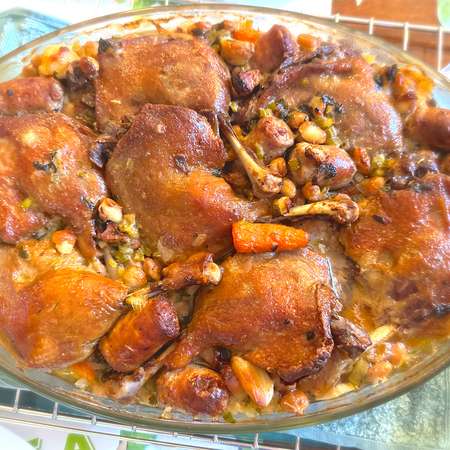
Experience the warmth of comfort food with our indulgent Duck Confit Cassoulet. This classic French dish features tender duck confit, savory Toulouse sausage, creamy white beans, and a medley of vegetables, all slow-cooked to perfection. Immerse yourself in rich flavors and hearty textures with this exquisite recipe that's perfect for gatherings or cozy evenings at home.

Home Recipes
Duck
French
Beans
Ingredients
Steps to make it
Nutrition Facts
Share this recipe
Comments
Main Course
Recipe Cuisine:
French
Servings:
6 people
Preparation Time:
30 minutes
Cooking Time:
Transport yourself to the rustic kitchens of France as you embark on a culinary journey filled with tender duck confit, succulent Toulouse sausages, creamy white beans, and a symphony of aromatic vegetables. This classic French dish captures the essence of slow-cooked indulgence and is an ode to the art of savoring every exquisite bite.
As you venture into the realm of culinary elegance, allow the rich flavors to envelop your senses, and the hearty textures to tell a story of tradition and togetherness. Whether shared at gatherings or savored during intimate evenings, our Duck Confit Cassoulet offers the perfect blend of sophistication and comfort, inviting you to experience a slice of French culinary heritage from the comfort of your own table.
The history of Cassoulet, a hearty and flavorful French dish, is deeply rooted in the regional culinary traditions of Southern France. Its origins date back centuries, and the dish's evolution has been shaped by local ingredients, cultural influences, and historical contexts.
Historical Background:
The exact origins of Cassoulet are subject to debate, but it's commonly believed to have originated in the region of Languedoc in Southern France. The dish was born out of practicality, being a way to create a hearty and satisfying meal using locally available ingredients.
Rural Origins:
Cassoulet was initially a humble peasant dish, characterized by slow-cooked beans and meats. Its name is derived from the traditional pot it's cooked in, called a "cassole" in Occitan, the local language of the region. Over time, as the dish gained popularity, it started to incorporate various regional ingredients, reflecting the local produce and culinary preferences.
Variations and Adaptations:
Cassoulet recipes can vary widely from village to village and even household to household. The core components typically include white beans (such as Great Northern beans), meat (commonly duck confit, Toulouse sausage, and sometimes pork), and aromatic vegetables. The choice of meats and seasonings can differ based on the available resources and the cook's preferences.
Culinary Traditions:
Cassoulet has become emblematic of the rich culinary heritage of Southern France. In some towns, there are annual Cassoulet festivals celebrating the dish, showcasing different interpretations, and vying for the title of the "best" Cassoulet. Each version is a testament to the local culinary traditions and the art of slow cooking.
Symbol of Comfort and Togetherness:
Cassoulet holds a special place in French cuisine as a symbol of warmth, comfort, and communal feasting. The hours of slow cooking required to meld the flavors together also emphasize the importance of patience and the art of culinary craftsmanship.
Modern Interpretations:
Today, Cassoulet is not only enjoyed in France but has also found its way onto menus around the world. Chefs and home cooks alike pay homage to its rustic charm by preserving the fundamental elements while occasionally adding modern twists.
Legacy:
Cassoulet's legacy as a celebrated dish continues to endure, serving as a bridge between generations and cultures, connecting us to the rich history of Southern France's culinary heritage.
As you prepare and savor your Duck Confit Cassoulet, you're participating in a culinary tradition that spans centuries, celebrating the time-honored flavors and techniques that have made this dish a cherished part of French gastronomy.
For this recipe, you can use canned Confit of Duck Legs or pre-made Duck Leg Confit, or you can of course make your own from Moulard Duck Legs & Thighs.
Ingredients:
- 4 duck confit legs
- 4 Toulouse sausages (or high-quality pork sausages)
- 200g (7 oz) smoked lardons (or smoked bacon), diced
- 400g (14 oz) dried white beans (navy beans or Great Northern beans)
- 2 carrots, peeled and diced
- 2 celery stalks, diced
- 1 onion, diced
- 4 cloves garlic, minced
- 2 bay leaves
- 4 sprigs thyme
- 1 can (400g/14 oz) diced tomatoes
- 500ml (2 cups) chicken or duck broth
- Salt and black pepper, to taste
- Fresh parsley, chopped (for garnish)
Steps to make it:
Steps to make Cassoulet:
Step 1: Prepare the Beans
- Rinse the dried white beans and soak them in water overnight. Drain and set aside.
Step 2: Sear the Duck Confit and Sausages
- In a large skillet, heat a tablespoon of duck fat (from the duck confit) over medium-high heat. Add the smoked lardons and cook until they start to brown and release their fat.
- Remove the lardons and set aside.
- Sear the duck confit legs until golden and crispy, about 4 minutes per side. Remove and set aside.
- In the same skillet, sear the sausages until browned. Remove and set aside.
Step 3: Sauté Aromatics and Vegetables
- In a large Dutch oven or oven-safe pot, heat another tablespoon of duck fat.
- Sauté onions, carrots, and celery until softened, about 5 minutes.
- Add minced garlic and cook for an additional minute.
Step 4: Combine and Cook
- Preheat the oven to 160°C (325°F).
- Add the soaked and drained white beans to the pot.
- Place the duck confit legs and sausages on top of the beans and vegetables.
- Add bay leaves, thyme sprigs, diced tomatoes, and enough chicken or duck broth to cover the ingredients.
- Bring to a simmer on the stovetop.
Step 5: Finish in the Oven
- Cover the pot and transfer it to the preheated oven.
- Bake for about 2 to 2.5 hours, or until the beans are tender and the flavors meld together.
Step 6: Serve
- Remove from the oven and discard bay leaves and thyme sprigs.
- Season with salt and black pepper to taste.
- Serve the cassoulet in individual bowls, making sure each serving has a piece of duck confit, sausage, beans, and vegetables.
- Garnish with chopped fresh parsley before serving.

© Copyrigh 2026 Laki Maikaʻi. All rights reserved.
Pairings:
- Crusty French baguette or artisan bread
- Mixed green salad with a light vinaigrette
- A full-bodied red wine, such as a Bordeaux or Rhône blend
Embrace the heartiness of Duck Confit Cassoulet, a dish that brings together the comfort of slow-cooked flavors with the elegance of French cuisine. Share this culinary delight with family and friends for a memorable dining experience.
Diets:
This Duck Confit Cassoulet recipe can be suitable for:
- Gluten-Free Diet: Ensure that the sausages used are gluten-free, and the recipe is naturally gluten-free if served without gluten-containing sides.
- Dairy-Free Diet: The recipe is dairy-free as written.
- Paleo Diet: The recipe may align with the Paleo diet depending on personal interpretations and preferences. Use high-quality sausages without additives, and the dish is rich in whole ingredients.
- Low-Carb Diet: While beans are a significant component, consider reducing the portion of beans for a lower-carb version.
- Nut-Free Diet: This recipe is nut-free.
Please note that individual dietary needs and restrictions may vary. Always review the ingredient labels and adjust the recipe according to your dietary preferences and requirements.
#DuckConfitCassoulet #FrenchComfortFood #HeartyCuisine #GourmetDelights #SlowCookedElegance #SavoryBeans #ClassicFrenchDish #CulinaryHeritage
Did you make this recipe?
Please Tag us on Instagram:@laki_maikai
Nutritional information provided is an estimate only. Please consult the labels of ingredients you use for more accurate results. Daily Value on the Nutrition and Supplement Facts Labels.